Apps: ECG, Cardiology, Physiology
ECG
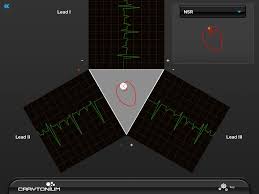
Demonstrating the Einthoven Leads of the 3-lead ECG system. The loop vector trace in each of the three leads shows the how the wave is generated. A simple insight into how the wave is formed allows the student to connect the amplitude and direction and time to form the vector.
Cardiology
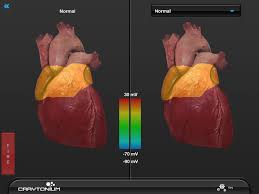
False colour propagation of excitation across the cardiomuscular tissue of the heart. The heart tissue is the unique electrical activity varies across the specialised structures if the heart. Changes in the metabolic function of these structures are revealed by the electrical changes observed by the ECG.
Physiology
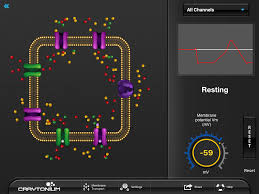
The electrical activity and excitability of the various cells in the body is attributed to the unique set of ion channels and transporters expressed in the membrane. The subtle variations of these ion channels change the behaviour of the cell. The ion gradient required for the potential difference is maintained by the ATPase Na/K transporter.